Whey Protein: Myth vs Reality
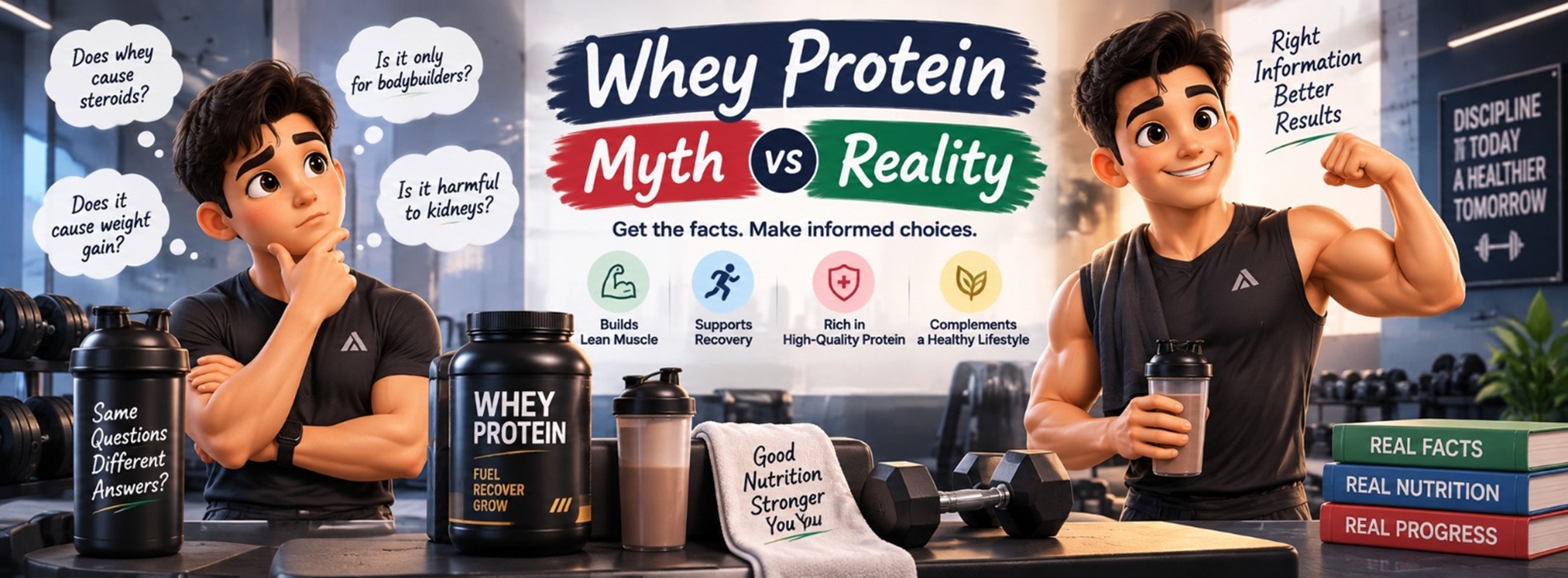
Whey Protein: Myth vs Reality
Whey protein has become a popular choice among gym-goers, fitness enthusiasts, and people looking to increase their daily protein intake. However, many myths surround its use, including claims that it damages the kidneys, causes excessive weight gain, or is only suitable for professional athletes.
Understanding the difference between myth and reality can help you make informed decisions about your nutrition and fitness goals.
What Is Whey Protein?
Whey protein is a complete protein derived from milk. It contains all nine essential amino acids that your body needs from food. Protein supports muscle growth, maintenance, and repair, making whey a convenient option for people who may not get enough protein through their regular diet.
Myth 1: Whey Protein Is Only for Bodybuilders
Reality: Whey protein is not limited to professional bodybuilders. Anyone who needs additional protein in their diet may consider it, including people who exercise regularly or struggle to meet their
protein requirements through food.
However, most people can obtain sufficient protein from foods such as eggs, dairy products, beans, nuts, and other protein-rich meals. Supplements aren't essential for everyone.
Myth 2: Whey Protein Automatically Builds Muscle
Reality: Whey protein provides the amino acids needed for muscle repair and growth, but consuming it alone does not build muscle. Resistance training, adequate nutrition, enough sleep, and consistency
also matter.
Whey can support your fitness routine by helping you meet your daily protein requirements.
Myth 3: Whey Protein Damages the Kidneys
Reality: Research suggests that higher protein intake within recommended ranges does not appear to harm kidney function in healthy adults in the short term. However, people with kidney disease may
need specific protein recommendations from a qualified medical professional.
The amount of protein you need depends on your health, activity level, and individual goals.
Myth 4: Whey Protein Causes Weight Gain
Reality: Whey protein does not automatically cause weight gain. Changes in body weight depend largely on your overall calorie intake, activity, and eating habits.
A protein shake can contribute to weight gain if it adds more calories than your body needs. On the other hand, it can fit into a balanced diet when used appropriately.
Myth 5: More Protein Means Better Results
Reality: Consuming more protein than your body needs does not guarantee faster muscle growth or better fitness results. Your total daily intake, exercise routine, and overall diet matter more than
simply increasing the number of scoops.
How to Choose Whey Protein Responsibly
Check the nutrition label, protein content, ingredients, and serving size before purchasing. Choose a product that fits your dietary needs and avoid relying on supplements as a replacement for balanced meals.
If you have an existing medical condition, food allergies, or concerns about protein intake, consult a qualified medical professional before starting a supplement.
The Bottom Line
Whey protein can be a convenient way to add protein to your diet, but it is not a magic solution for muscle growth or weight management. Understanding the facts can help you use it responsibly as part of a balanced lifestyle.
Disclaimer: This article is for general informational purposes only and should not be considered medical advice. Individual nutrition and protein requirements vary. Consult a qualified medical professional or registered dietitian for personalised guidance.
Frequently Asked Questions (FAQs)
Whey protein is a complete protein derived from milk that contains all nine essential amino acids.
No. You can obtain protein from regular foods. Whey protein is a convenient supplement that may help you meet your daily protein requirements.
Whey protein does not automatically cause weight gain. Its effect on body weight depends on your total calorie intake and overall diet.
Whey protein may not be suitable for everyone, particularly people with certain medical conditions or milk allergies. Consult a qualified medical professional if you have concerns.
The appropriate amount depends on your daily protein needs, diet, activity level, and health. Follow the product instructions and seek professional guidance if needed.
Yes. Whey protein can be used to supplement dietary protein even if you do not go to the gym. However, it is not necessary if you already meet your protein needs through food.No. Many affordable foods, including eggs, spinach, seasonal fruits, lentils, and other vegetables, can provide valuable nutrients. Healthy eating does not have to be expensive.
Whey protein is convenient and provides complete protein, but it is not automatically better than protein-rich foods. A balanced diet can provide the nutrients your body needs.
🔔 Stay Connected with Policyfy
At Policyfy, we don’t just provide policies—we share insurance knowledge that protects you better.
Contact Us for the Best Insurance Plans Now at www.policyfy.com
👉 Contact Us